Peer-reviewed research × frontier AI
Enhance Your Appearance, Naturally
The best-looking version of you is already in there. We find it, measure it, and show you how to bring it out.
Before / after
This is what a real transformation looks like.
Every try-on in your Blueprint is rendered on your own photo and limited to styling and care — cut, beard, colour, skin, framing. Your bone structure stays yours. Drag to compare the kind of change a plan targets: a styling projection, not a surgical promise.

 Before After

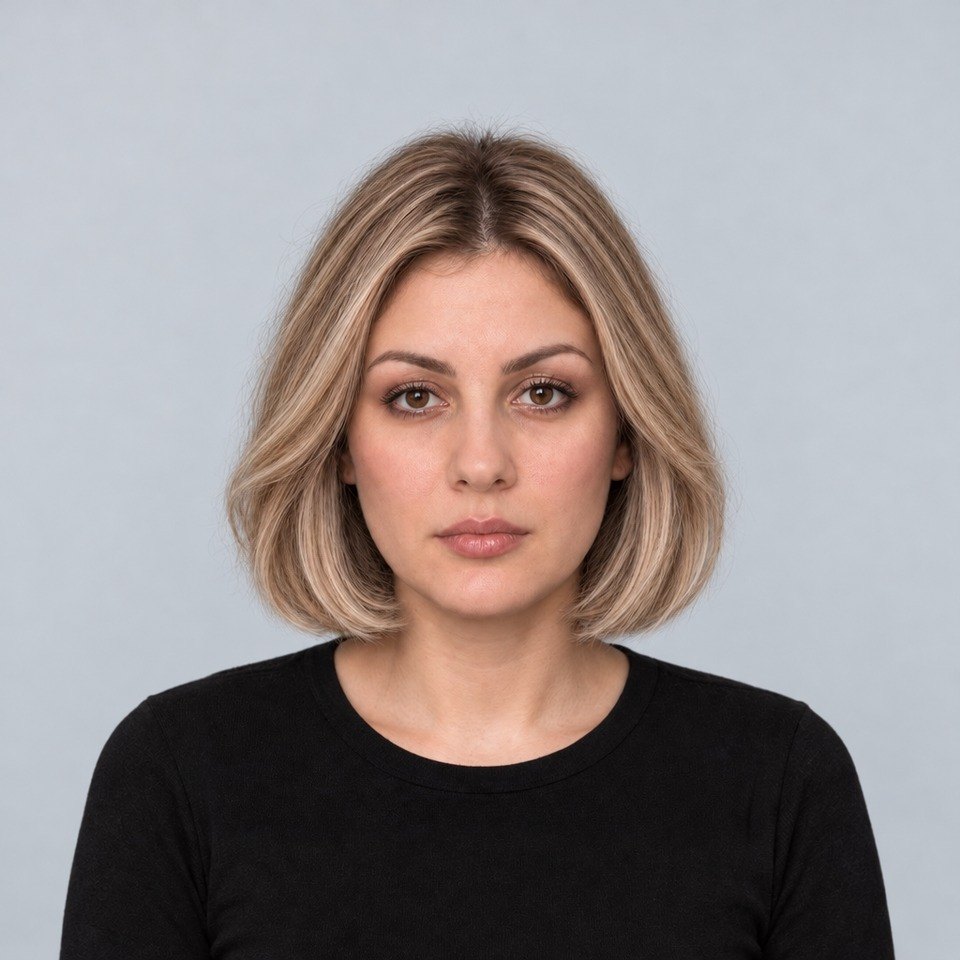 Before After
A smarter route
Stop guessing. Start measuring.
The old way
- Step 1
Guess what’s “wrong”
- Step 2
Scroll conflicting advice
- Step 3
Nothing changes
Our way
- Step 1
Upload 7 photos
- Step 2
Every feature, measured
- Step 3
A plan + try-ons on your face
Why it matters
Your face shapes outcomes. That’s measured, too.
Eight published findings, each linked to its paper. Appearance isn’t destiny, but your face is worth understanding.
-
Dating
Looks predict romantic interest
In live speed-dating experiments, physical attractiveness predicted interest — for both sexes, whatever people said they wanted.
Eastwick & Finkel, J. Personality & Social Psychology (2008) -
First impressions
The halo effect holds worldwide
Across 45 countries, faces rated more attractive were also rated more confident, intelligent, sociable and trustworthy.
Batres & Shiramizu, Current Psychology (2023) -
Perception
People agree more than you’d think
A meta-analysis of hundreds of studies: raters broadly agree on attractiveness, and treat attractive people measurably differently.
Langlois et al., Psychological Bulletin (2000) -
Work
The beauty premium is real
Tracking 40,000+ MBA graduates for up to 15 years, attractive graduates earned at least $2,508 a year more.
Malik, Singh & Srinivasan, Information Systems Research (2024) -
Social media
Looks help turn viewers into fans
Across 1,470 live-streaming sessions, creators with more attractive faces converted more viewers into fans — alongside voice, sociability and professionalism.
Yang, Luo & Luo, Int. J. Electronic Commerce (2025) -
Happiness
Attractive people report feeling better
A decades-long Wisconsin cohort found higher physical attractiveness was associated with greater well-being and less distress.
Datta Gupta, Etcoff & Jaeger, J. Happiness Studies (2016) -
Health
Your skin reads as health
Brighter skin around the eyes and redder cheeks made the same faces look healthier — and dark under-eyes hurt the most.
Jones et al., Body Image (2016) -
Lifestyle
Sleep shows on your face
After two nights of short sleep, the same people were rated less attractive and less healthy — and others were less keen to socialise with them.
Sundelin et al., Royal Society Open Science (2017)
How it works
Upload to insight in under 30 minutes.
- 01
Upload 7 photos
A guided flow captures front, profile, and top views with per-photo quality checks, so every shot is usable before you finish.
- 02
The pipeline measures
478 landmarks are mapped server-side, 45+ measurements computed, and frontier AI writes the plain-language read for each of the 18 dimensions.
- 03
Blueprint + galleries land
Your Blueprint PDF and style try-ons arrive together — usually in under 30 minutes, and we email you when they are ready.
- 04
Track what changes
Re-analyse each year and compare side by side. The measurements are deterministic, so the movement you see is real.
Your analysis
See your face the way everyone else does.
Your mirror shows you flipped; your photos show the face others see. Every measurement has a literature reference range, never a fake percentile, plus classifications and plain-language prose for all 18 dimensions.
Actual portal interface, shown with illustrative values.
What you get
One upload. Your plan to look your best.
-
Every feature, measured
478 landmarks and 45+ measurements across 18 analysis sections: all twelve features, from eyes and eyebrows to skin, hair and ears, each explained in plain language. Skin includes your undertone.
-
Six whole-face assessments
First impression, dimorphism, golden ratio, proportions, symmetry and face shape.
-
Where you are, and where you can get
Each feature gets a current score, judged against people your own age, beside the achievable score your plan can realistically reach.
-
Your Blueprint, step by step
What to do for each feature, highest-impact first, including a morning and evening skin sequence. Online, plus a PDF to keep.
-
Up to 10 hairstyles on your face
Men and women: up to ten cuts that fit your face shape and the hair you have, rendered on your own photo, not a stock model.
-
Men: 10 facial-hair styles
Stubble to full beard, matched to your jaw and to your recommended cut, on your own photo.
-
Women: 10 Beauty Looks
Each pairs a recommended cut with hair colour and makeup matched to your undertone, on your own photo.
-
Your ideal self
One image of you with your plan applied: cut, styling and skin. Styling and care only, by design: it never edits your bone structure.
-
Dimorphism morphs
Your face shifted slightly more masculine and slightly more feminine. An exploration, not a promise.
-
Progression tracking
Re-analyse next year and see both analyses side by side. The measurements are deterministic, so the change you see is real.
Pricing
Less than a single consult. Renewed yearly.
-
Aesthetic Blueprint
$59 per year
- Full 18-section facial analysis
- Your personalised Blueprint, with a PDF to keep
- Up to 10 hairstyles picked for your face, on your own photo
- Men: beard and facial-hair styles on your photo
- Women: a Beauty Look — cut, colour and makeup on your photo
- Dimorphism morphs and undertone read
- 1 analysis per year
- Cancel anytime
The science
32 studies. All real, all linked.
We don’t claim "thousands of studies" — we show you the ones we actually build on, with links, including the papers that tell us what not to measure. Every measurement in your report traces to this literature or is labelled as a subjective read.
What makes a face attractive 5
- [1]
Averageness, symmetry, and sexual dimorphism are attractiveness cues across cultures.
- [2]
The comprehensive review of symmetry, dimorphism, averageness, and skin cues.
- [3]
Measured together, attractiveness tracked masculinity, symmetry and averageness in men, femininity in women, and lower facial adiposity in both.
- [4]
How professional facial analysis actually assesses faces.
- [5]
Meta-analysis: people agree on attractiveness and treat attractive people measurably differently.
How looks affect your life 8
- [6]
The "beauty premium": rated appearance correlates with measurable earnings differences.
- [7]
In live speed-dating, physical attractiveness predicted romantic interest for everyone.
- [8]
In a daily-diary study, more attractive people had more day-to-day social interaction — most clearly, more opposite-sex contact for men.
- [9]
Across real elections, candidates’ rated beauty predicted vote share — more than perceived competence.
- [10]
In a decades-long Wisconsin cohort, higher physical attractiveness was associated with greater well-being and less distress.
- [11]
Across 45 countries in 11 world regions, faces rated more attractive were also rated more confident, emotionally stable, intelligent, responsible, sociable and trustworthy.
- [12]
Tracking 40,000+ MBA graduates for up to 15 years, attractive graduates earned at least $2,508 a year more than plain-looking ones.
- [13]
Across 1,470 sessions on a leading live-streaming platform, hosts’ facial attractiveness increased how many viewers became fans.
Averageness 4
- [14]
The classic result on average faces.
- [15]
Averageness matters — but the most attractive shapes deviate from it systematically.
- [16]
Across 1,550 faces from 10 countries, faces further from their population’s average were rated less attractive, in every population studied.
- [17]
A replication: averageness predicted attractiveness in both sexes and femininity in women; symmetry and masculinity did not.
Symmetry & dimorphism 3
- [18]
Symmetry and averageness measured against rated attractiveness.
- [19]
The masculine–feminine axis our Dimorphism section reads.
- [20]
In five countries, women’s perceived femininity went with attractiveness everywhere; men’s masculinity was preferred in only two.
Skin 2
- [21]
Skin evenness shifts perceived age and health — why Skin is a full section.
- [22]
Brighter skin around the eyes and redder cheeks made the same faces look healthier; dark under-eyes hurt the most.
Health & habits 4
- [23]
Perceived facial fatness tracks real cardiovascular health and reported infections — the face carries genuine health signals.
- [24]
Eating more fruit and vegetables measurably shifted skin colour toward a healthier tone within weeks.
- [25]
After two nights of short sleep, the same people were rated less attractive and less healthy, and others were less keen to socialise with them.
- [26]
In a randomised trial of 903 adults, daily sunscreen users showed no detectable increase in skin aging over 4.5 years — 24% less aging than occasional users.
The golden ratio, tested 4
- [27]
The golden-ratio mask fails as a beauty standard. We show φ as description, never a verdict.
- [28]
Preferred facial ratios are not the classical φ ratios.
- [29]
The neoclassical "ideal proportions" rarely occur in real attractive faces.
- [30]
When 161 people rated 3D faces, attractiveness tracked only a handful of the textbook “ideal” ratios and angles.
How we measure 2
- [31]
The 478-landmark face-mesh model family our measurement engine builds on.
- [32]
The Norwood scale our hairstyle and facial-hair recommendations respect.
Methodology
The numbers behind the numbers.
- Facial landmarks mapped
- 478
- Dense face-mesh landmarking [31], run server-side for month-over-month consistency.
- Geometric measurements
- 45+
- Canthal tilt, gonial angle, facial thirds, nasofacial angle, and more — deterministic, not eyeballed.
- Analysis dimensions
- 18
- Six whole-face assessments and twelve feature sections, each with its own read.
- Upload to report
- 30 min
- Typical turnaround on the live pipeline. Everything is released together, and we email you when it is ready.
The prose is written by frontier AI, and every try-on image is AI-created on your own photo — then aligned back to your original by the measurement engine.
FAQ
Frequently asked questions.
-
What is VeraSoma?
VeraSoma measures your face from seven photos and turns what it finds into a plan to look your best. You get a research-backed analysis of 18 areas of your face and a personal Aesthetic Blueprint covering skincare, hair and styling, with try-ons on your own photos. The name means "true self": we help you reach the best of yours, without surgery wherever that is possible.
-
Where are my photos stored, and can I delete them?
In private, encrypted storage keyed to your account. We never sell them or use them to train models. You can delete your account, and everything in it, at any time from your settings. If you cancel instead, we keep your results for 30 days so you can come back, then delete them automatically. Read the privacy policy.
-
What is the difference between the Aesthetic and Advanced Blueprint?
The Aesthetic Blueprint ($59 a year) is everything you can do yourself: the full 18-section analysis, your personalised Blueprint of skincare, hair and styling, and every try-on gallery. Styling and care can only take you so far, so the Advanced Blueprint ($149 a year) adds what a provider can do — Botox® and fillers, in-office treatments like RF microneedling, and plastic surgery: what each addresses, how reversible it is, and what to ask. It is coming soon and not available to buy yet.
-
How long do results take?
Usually under 30 minutes from your final upload. Everything is released together once it is all ready, and we email you. The portal shows progress while it runs.
-
Can I cancel, or get a refund?
Cancel anytime from your account settings; your access continues to the end of the year you paid for. You can have a full refund until you start an analysis. Once an analysis has started, the membership is non-refundable.
-
Will you give me a beauty score or a percentile?
No — and be suspicious of anyone who does. A population percentile requires a licensed, measurement-grade dataset; we don’t show one until we have one. You get real measurements, literature reference ranges, and a clearly-labelled subjective impression instead.
-
Is this a medical service?
No. VeraSoma is an aesthetic information service grounded in published research. It is not a medical diagnosis. Always consult a qualified clinician before any procedure.
-
Can it show me what surgery would look like?
Not yet. Everything in your Blueprint today — every try-on and your ideal-self image — is styling and care only. The Advanced Blueprint, coming soon, will show what injectables, in-office treatments and plastic surgery could address, as clearly-labelled simulations of a typical result, never a best case. The dimorphism morph, which does shift structure, is labelled as an exploration, not a result you can buy.
-
What actually makes a face attractive?
Research points to a few cues people share across cultures: averageness, symmetry, how masculine or feminine a face reads, and even, healthy-looking skin. A single "golden ratio" is not one of them; the studies that tested it are in our list. Your analysis reads your symmetry, how masculine or feminine your face reads, and your skin. See the studies.
-
Why do I look different in photos than in the mirror?
A mirror shows your face flipped left to right, and that is the version you are used to. A photo shows it the right way round, the way everyone else sees you. Your analysis is measured from your photos, so it reads the face other people see.
Under 30 minutes to an honest answer.
Seven photos. 478 landmarks. A report that tells you what it knows — and what it doesn’t.
Start your analysis